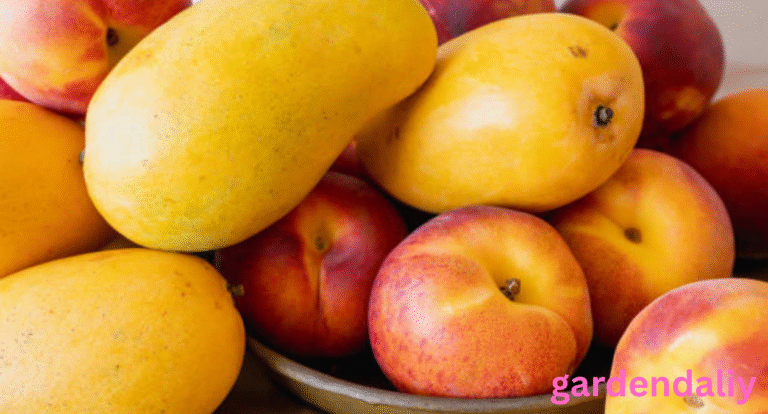
Mangoes are known for their irresistible sweetness, vibrant colors, and smooth, oval shape. But many fruits that look like mango around the world share similar characteristics, making them easily mistaken for mangoes—especially from a distance or when unripe. These mango look-alikes come from tropical, subtropical, and even temperate climates, each offering unique flavors and textures.
click in link Garlic Shortage
Papaya (Carica papaya)
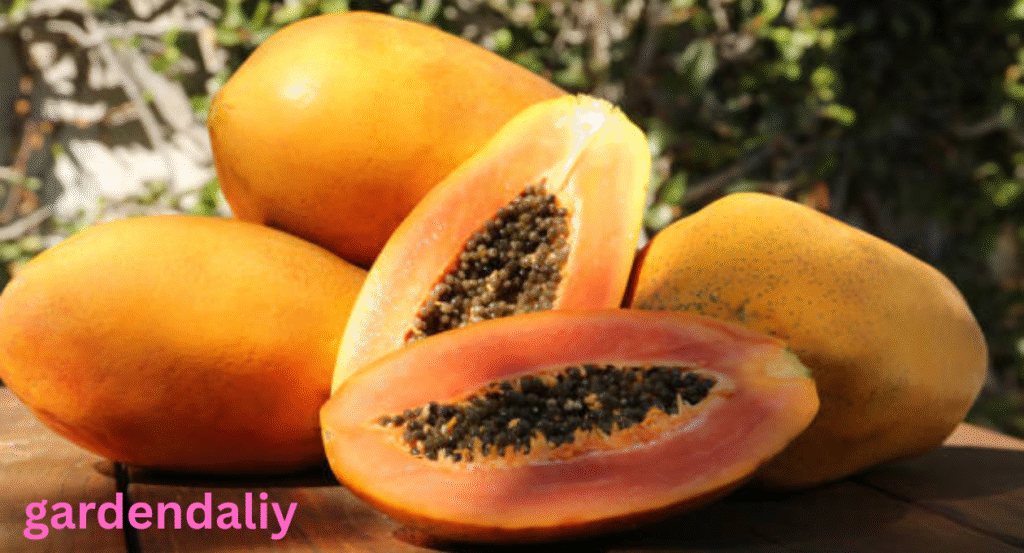
Papaya is the fruit most commonly mistaken for mango, especially when unripe. Green papayas and some elongated papaya varieties have the same smooth exterior and curved shape as mangoes. From a quick glance, a papaya sitting on a market shelf can easily seem like a giant mango.
Papayas resemble mangoes because of their oval-to-long shape, uniform green skin (when unripe), and glossy surface. However, papayas are typically larger, with softer skin and a more cylindrical look. Inside, papayas contain soft orange flesh and a hollow center filled with small black seeds—very different from a mango’s single flat seed. Their flavor is mild and less aromatic than mango, making them easier to distinguish once cut open.
Ambarella (Spondias dulcis)
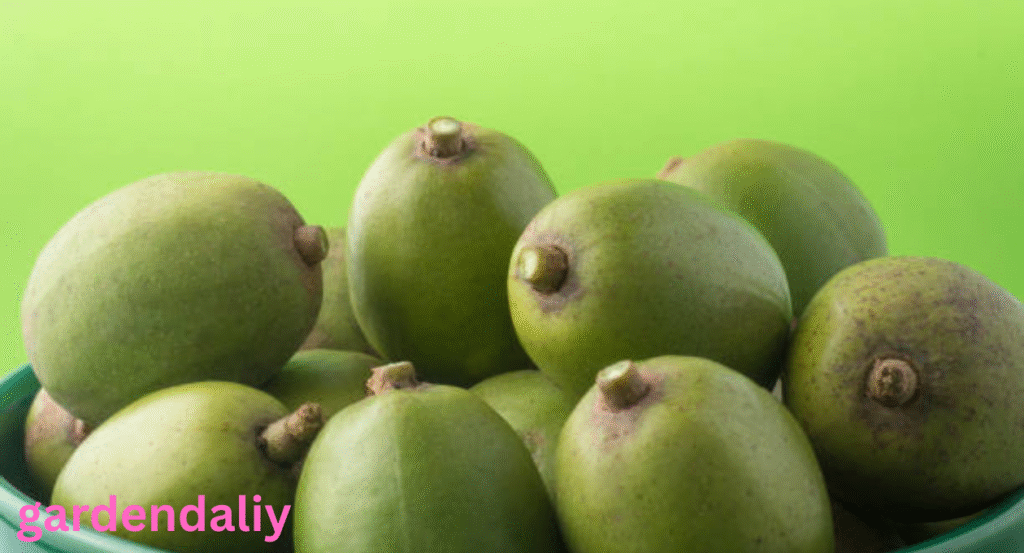
Ambarella, also called June plum or golden apple, is another fruit widely confused with mango. Its green skin, oval shape, and shiny surface make it look very much like an unripe mango. When ripe, ambarella often turns a yellowish color that further enhances the resemblance.
Ambarella looks like mango mainly because of its similar shape and color. However, it is much firmer and crunchier, with a crisp texture similar to an apple. The inside contains a fibrous, spiky seed, unlike a mango’s smooth pit. Its taste is tangy and refreshing, often used in salads, chutneys, and juices. While it appears mango-like, one bite is enough to tell the difference.
Cajá / Hog Plum (Spondias mombin)
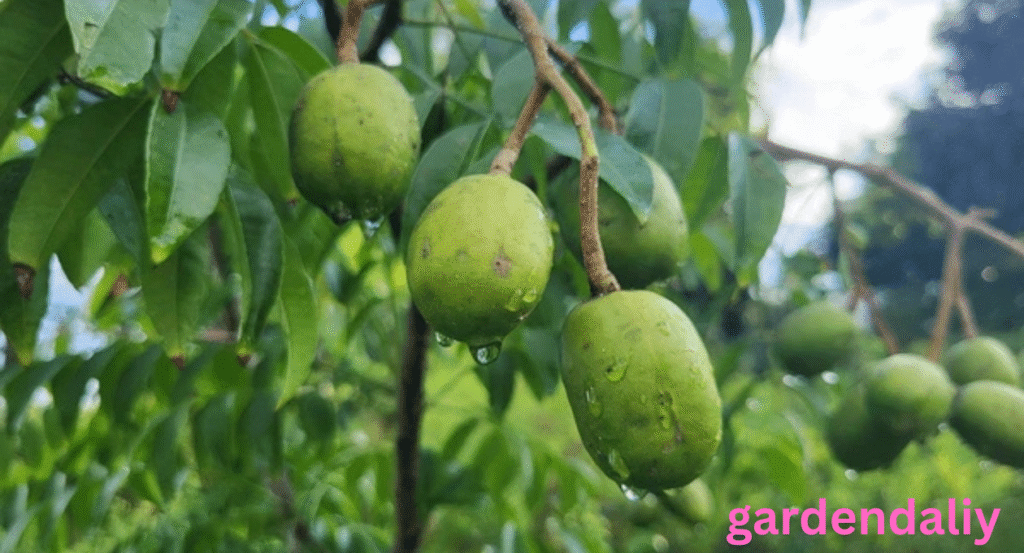
Cajá, also known as hog plum, grows widely in tropical regions and belongs to the same botanical family as mango—the Anacardiaceae family. This shared ancestry explains why cajá looks similar to a small mango. Its skin color ranges from green to bright yellow, and it often has the same elongated, oval appearance.
Even though cajá resembles a miniature mango, its taste is very different. Cajá is sour and tangy, with a jelly-like interior. It is commonly used in juices, candies, and jams rather than eaten fresh like a mango. Size is the biggest giveaway—cajá is much smaller and easier to hold in one hand.
Canistel (Pouteria campechiana)
Canistel, popularly known as eggfruit, is another tropical fruit that closely resembles a mango. Its bright yellow-orange skin and smooth surface give it the same visual appeal as a ripe mango. Some varieties even grow into a shape nearly identical to mangoes found in Southeast Asia.
However, canistel has a very different interior. Its flesh is dry, dense, and custard-like, which is why it is often compared to the texture of cooked egg yolk. It has a sweet, earthy flavor and is commonly used in desserts, smoothies, and baking. Canistel’s seed is rounder and darker than a mango seed, making it easier to identify after slicing.
Lucuma (Pouteria lucuma)
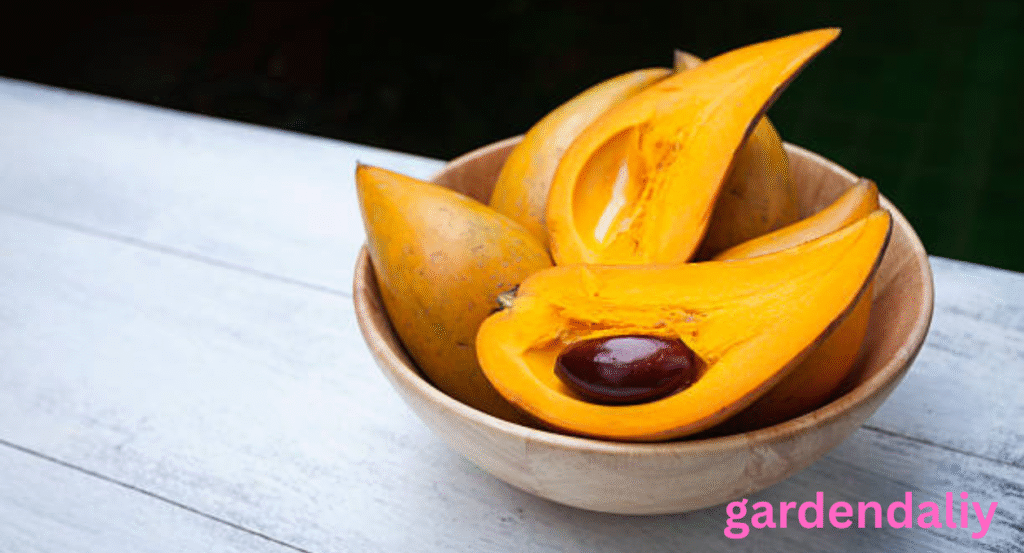
Lucuma is a tropical fruit native to the Andean region of South America. At first glance, lucuma can be mistaken for a mango because of its greenish-yellow skin and rounded oval shape. Some lucuma varieties develop a golden hue when ripe, enhancing their mango-like appearance.
Inside, lucuma has a dry, creamy, golden flesh with a caramel-like flavor profile. It is not juicy like mango; instead, its powdery texture makes it a popular ingredient in ice creams, pastries, and smoothies. The fruit has a thick outer skin and is more spherical compared to most mango varieties.
Yellow Plum (Golden Plum / Mirabelle Plum)
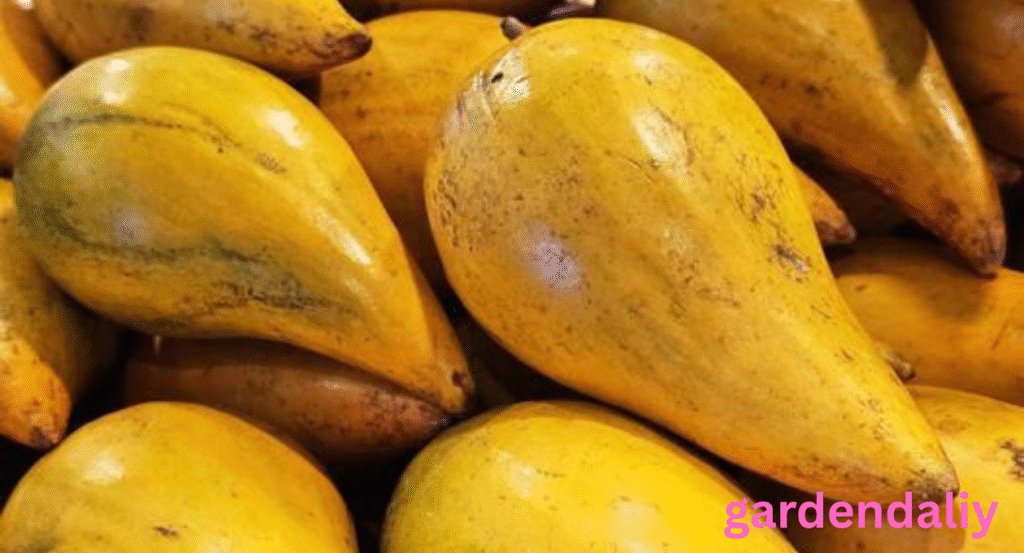
Yellow plums are much smaller than mangoes, but when ripe, their bright golden color and smooth surface bear a surprising resemblance to small mangoes. Their shiny skin and uniform yellow tone often catch the eye of fruit lovers who mistake them for tiny mango varieties.
Despite their similar color, yellow plums are round and have a tart-to-sweet flavor. Their juicy texture is completely different from mango’s fibrous sweetness. Because of their size and distinct taste, they are easy to identify once held or tasted.
Peach Mango Varieties (Elongated Peaches)
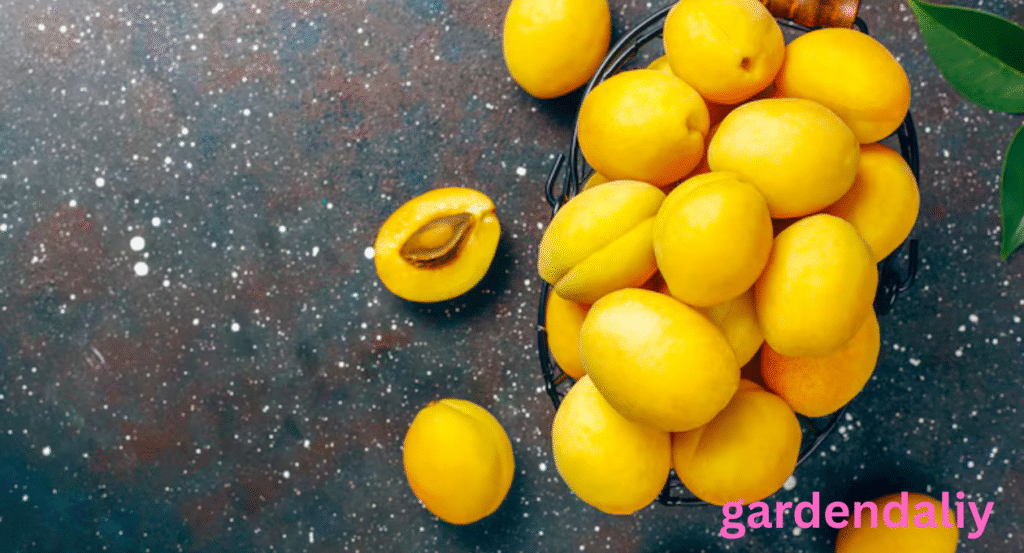
Some rare peach cultivars grow in elongated shapes that mimic the look of small mangoes. Their yellowish-orange skin, especially when smooth, can be mistaken for mangoes in markets or orchards.
However, peaches have fuzzy skin—a major difference. They also have a distinct floral aroma and soft, juicy flesh that sets them apart from the firmer, fiber-rich mango texture.
Conclusion
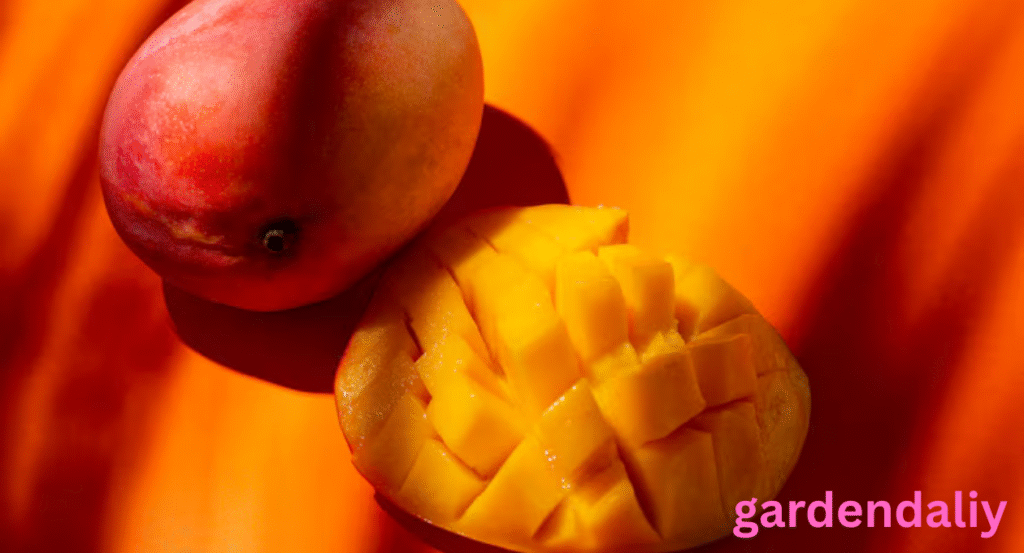
Fruits that look like mango come from many different parts of the world, and although they share a similar appearance, each fruit has its own distinct flavor, texture, and culinary use. While mango remains unmatched in its sweetness and rich aroma, its look-alikes—such as papaya, ambarella, cajá, canistel, lucuma, and yellow plums—offer unique tasting experiences that are equally enjoyable. Exploring these mango-like fruits not only helps you appreciate nature’s diversity but also introduces you to new flavors you may not have tried before. If you ever come across a fruit that looks like a mango, take a closer look—you might discover a refreshing surprise.
click in link Garlic Shortage
FAQs
1. Why do so many fruits look like mango?
Many tropical fruits develop similar shapes, colors, and skin textures due to similar growing conditions and evolutionary adaptations. These similarities are nature’s way of helping fruits attract animals for seed dispersal.
2. Which fruit is most commonly mistaken for mango?
Papaya is the most commonly mistaken fruit because its elongated shape and green skin closely match that of unripe mango.
3. Are mango look-alike fruits edible and safe?
Yes, all the fruits mentioned—such as papaya, ambarella, cajá, canistel, and lucuma—are completely edible and commonly enjoyed in different cultures.
4. Do any fruits actually taste like mango?
While some fruits may share a slight tropical tang, none fully replicate mango’s sweet, aromatic flavor. However, canistel and lucuma share a rich, sweet profile that some people find similar in certain recipes.
5. Can these fruits replace mango in recipes?
It depends on the dish. Papaya can work as a substitute in smoothies or salads. Canistel and lucuma can be used in desserts. However, none will perfectly match mango’s texture and sweetness.