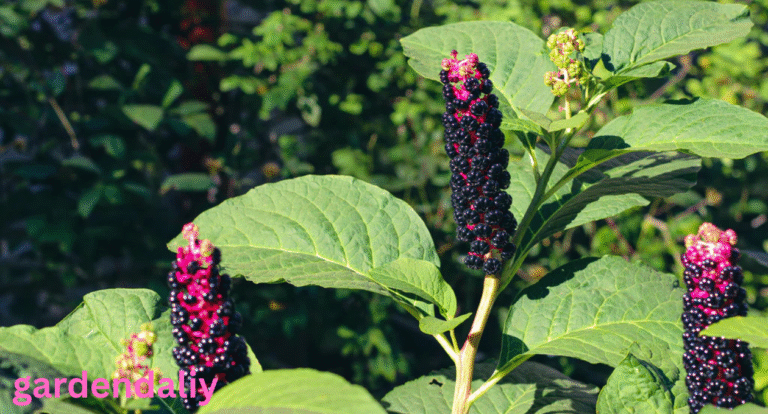
Pokeweed (Phytolacca americana) is a plant that often stands out because of its tall height, colorful stems, and deep purple berries. While some people admire its dramatic appearance, pokeweed look alikes is also highly toxic, and misidentifying it can lead to serious health risks for humans, pets, and livestock. Adding to the challenge, several plants in North America share similar features—berries, leaves, or stems—making them easy to confuse with pokeweed.
click in link Japanese Knotweed Berries
In this blog, we’ll explore the key characteristics of pokeweed, why it’s frequently mistaken for other plants, and the most common pokeweed look-alikes you may encounter in the wild or in your backyard.
What Is Pokeweed?
Pokeweed is a perennial herb that grows vigorously in disturbed soil. You’ll often find it along fence lines, roadsides, forest edges, abandoned lots, and untended gardens. Mature plants can reach up to 10 feet tall, creating a bush-like appearance. Although pokeweed has historical significance in folk medicine and traditional southern cooking (such as “poke sallet”), modern health authorities strongly warn against consuming any part of the plant due to its toxicity.
Key Features of Pokeweed
- Height: 3–10 feet
- Stems: Smooth, thick, and reddish-purple
- Leaves: Large, oval, bright green, and arranged alternately
- Berries: Drooping clusters of green berries that ripen into shiny purple-black fruit
- Roots: Large, white, and carrot-like
Each part of the plant contains toxic compounds, making identification especially important.
Why Pokeweed Gets Confused with Other Plants
Several plants share features such as:
- Colorful berries
- Reddish stems
- Tall, shrubby growth
- Large green leaves
At a quick glance—or from a few steps away—pokeweed can look similar to elderberry, dogwood shrubs, or even ornamental plants like beautyberry. However, subtle but reliable differences can help you identify what’s what.
How to Identify Pokeweed Correctly
Before exploring pokeweed look-alikes, it’s helpful to understand the details that make pokeweed unique.
1. Leaves
Pokeweed leaves are large (up to 12 inches), smooth-edged, and slightly wavy. They grow in an alternating pattern and taper into a pointed tip. The surface is smooth, not fuzzy or textured.
2. Stems
The stems are one of the easiest identifiers. Mature pokeweed stems are reddish-purple and thick. Unlike woody shrubs, pokeweed stems remain herbaceous (soft) throughout the season and contain a white pith inside.
3. Berries
Pokeweed berries grow in elongated, drooping racemes. Each berry starts green and slowly turns dark purple or almost black. The berry stalks are usually bright red or pink.
4. Root System
Pokeweed has a large, white taproot that resembles a giant parsnip. This root is especially toxic and difficult to remove once established.
Common Pokeweed Look-Alikes
Now let’s explore the plants most commonly confused with pokeweed and the traits that set them apart.
1. Elderberry (Sambucus spp.)
Elderberry is perhaps the most common pokeweed look-alike because of its dark berries and similar height.
Similarities
- Both grow berries that turn dark purple or black
- Both reach 6–10 feet tall
- Found in similar environments
How to Tell Them Apart
- Berry Structure: Elderberries grow in flat-topped, umbrella-shaped clusters, not long drooping ones
- Stems: Elderberry stems are woody, not soft
- Leaves: Elderberry leaves are compound, with multiple leaflets
- Edibility: Elderberries are edible when cooked; pokeweed berries are poisonous
If the plant looks like a small tree with woody stems, it is likely elderberry.
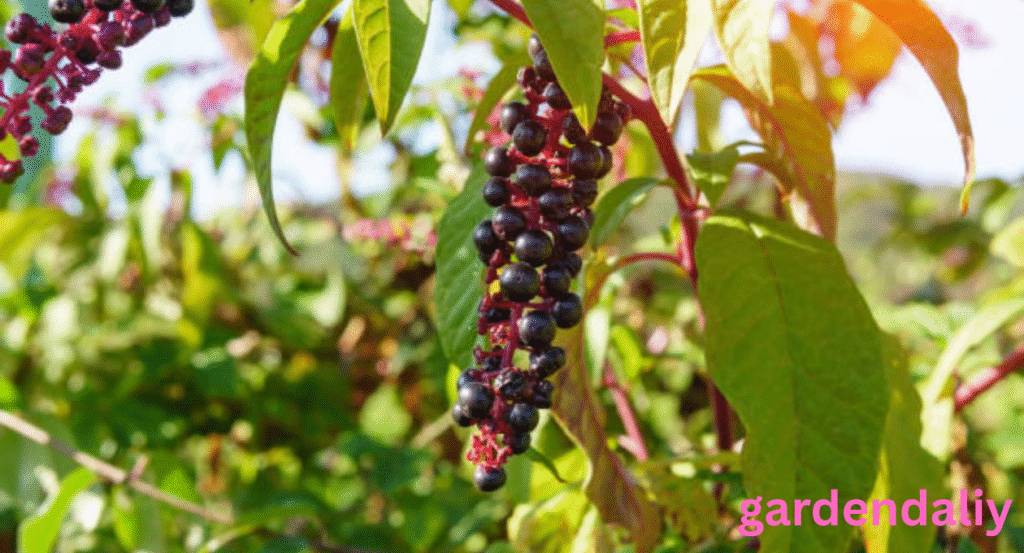
2. American Beautyberry (Callicarpa americana)
This plant is popular in gardens and grows naturally in woodland areas.
Similarities
- Produces colorful berries
- Has a shrubby, bush-like form
Key Differences
- Berry Color: Beautyberry fruits are bright purple or magenta, not dark purple-black
- Berry Arrangement: Berries form in tight clusters around the stem, not elongated drooping strands
- Stems: Usually green, not red
Beautyberry is harmless and attractive, making it a common garden plant.
3. Dogwood Shrubs (Cornus spp.)
Several dogwood species produce berries and broad green leaves.
Similarities
- Oval leaves
- Seasonal berries
- Shrub-like growth
How They Differ
- Berries: Dogwood berries are usually white, blue, or red, not black
- Leaf Veins: Leaves have distinctive curved veins
- Stems: Dogwood stems are truly woody, unlike pokeweed’s soft stems
If the plant resembles a small tree with firm branches, it’s most likely dogwood.
4. Porcelain Berry (Ampelopsis brevipedunculata)
Often confused with pokeweed from a distance, porcelain berry is an invasive vine.
Similarities
- Grows clusters of berries
- Sometimes has reddish stems
Clear Differences
- Berry Colors: Can be blue, teal, purple, pink, or even speckled
- Growth Habit: It climbs like a vine, wrapping around fences and trees
- Leaves: Deeply lobed, similar to grape leaves
Once you notice the climbing growth, it’s clearly not pokeweed.
5. Jerusalem Cherry (Solanum pseudocapsicum)
An ornamental plant often found indoors or in gardens.
Similarities
- Produces round berries
- Can appear bushy
Differences
- Berry Color: Typically orange or red, not purple
- Plant Size: Much smaller, usually under two feet
- Leaves: Narrow and smooth
Even though it’s toxic, it doesn’t closely resemble pokeweed when inspected.
Conclusion
Identifying pokeweed and distinguishing it from its look-alikes is essential for anyone who hikes, gardens, or forages. While pokeweed’s colorful berries and red stems make it visually striking, its toxicity means you should always handle it with caution. Many plants—such as elderberry, beautyberry, dogwood, and porcelain berry—may appear similar at first glance, but key differences in their stems, leaves, and berry clusters make it possible to tell them apart confidently.
click in link Japanese Knotweed Berries
By learning how to recognize these characteristics, you can protect yourself, your family, and your pets while also preserving beneficial or harmless plants that may share pokeweed’s appearance. Whether you’re exploring nature or simply trying to keep your garden safe, proper identification is your best tool.
FAQs
1. Is pokeweed poisonous?
Yes. All parts of pokeweed—including the berries, leaves, stems, and especially the roots—are toxic to humans, pets, and livestock. Eating pokeweed can cause nausea, vomiting, stomach pain, and more serious reactions.
2. How can I quickly tell pokeweed from elderberry?
Check the stems and berry arrangement. Elderberry has woody stems and flat umbrella-shaped clusters of berries, while pokeweed has soft purple stems and long drooping strands of berries.
3. Are pokeweed berries safe if cooked?
No. Unlike elderberries, pokeweed berries remain toxic even when cooked. They should never be eaten.
4. Where does pokeweed usually grow?
Pokeweed commonly grows in disturbed soils such as garden edges, pastures, fence lines, ditches, forest edges, and fields.
5. How can I safely remove pokeweed?
Wear gloves, long sleeves, and eye protection. Remove young plants by pulling up the entire root. Older plants have deep taproots that may require digging. Dispose of all parts of the plant in sealed bags—do not compost pokeweed.
6. Is beautyberry similar to pokeweed?
Only in berry color and general growth shape. Beautyberry has bright purple berries arranged in tight clusters around the stem, whereas pokeweed’s berries grow on long drooping stems.